PRODUCT
SSD multi-functional RDT
1、Exterior
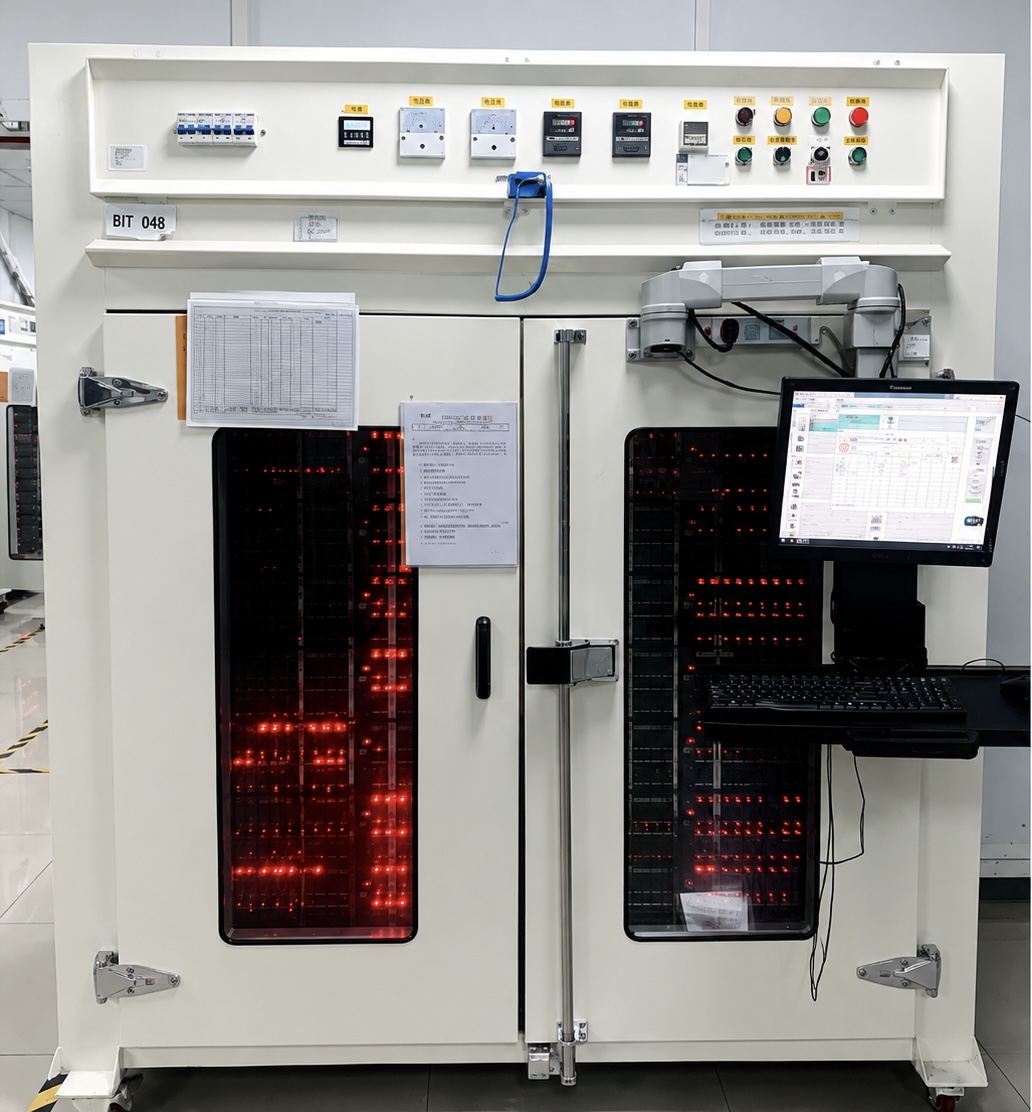
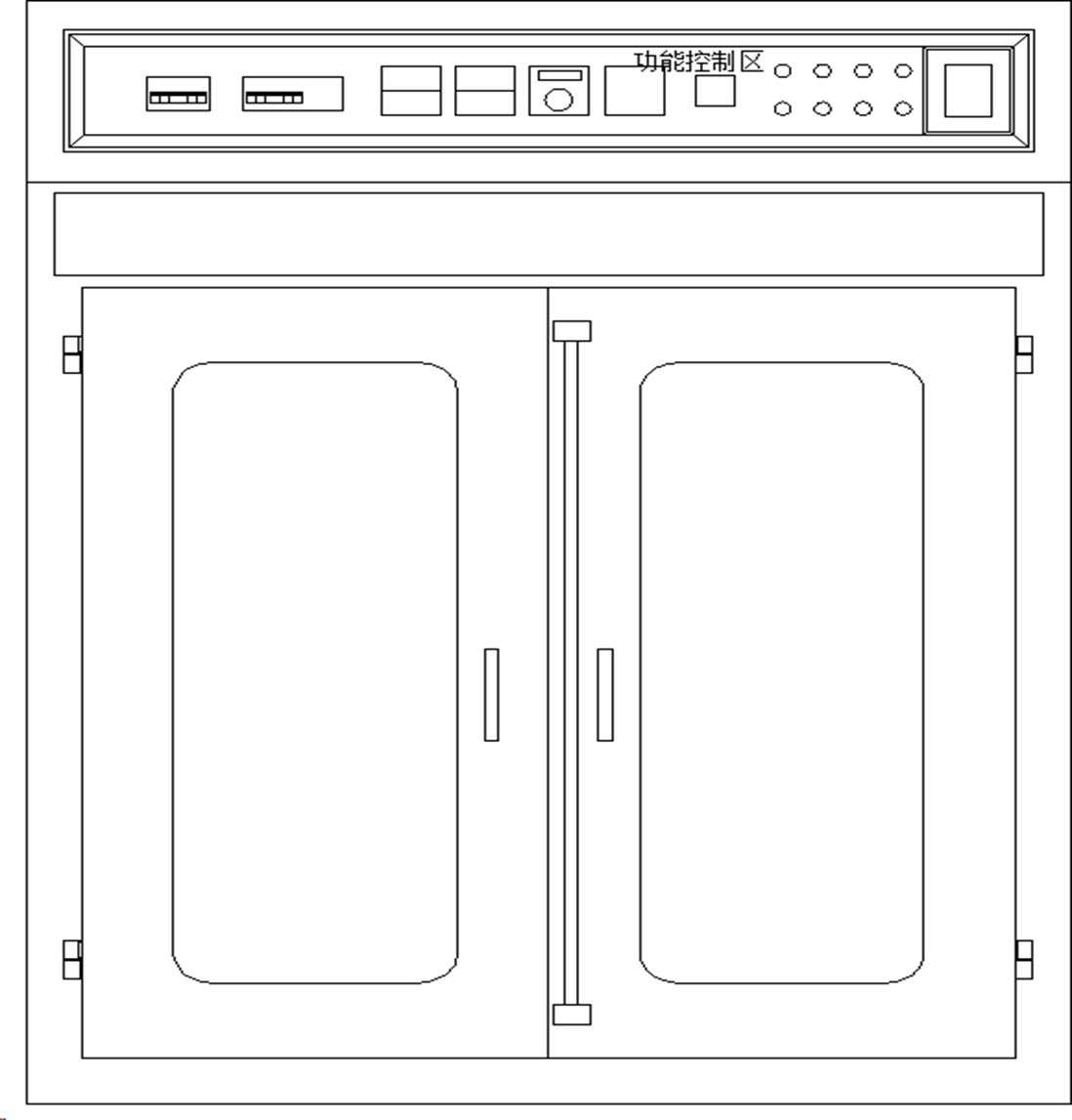
Carton size: 180X207X50CM (WxHxD) Studio size: 150X135X35CM(WxHxD)
Cabinet Performance Specifications
Heating Chamber
1. The exterior cabinet is constructed from 1.2 mm cold-rolled steel sheet.
2. The inner chamber is constructed from 1.2 mm galvanized steel sheet.
3. The chamber features an 80 mm thermal insulation layer made of aluminum silicate rock wool.
4. The air circulation system uses one Taiwan Oakli vertical extended-shaft motor rated at 1 HP/380 V. It includes a 10.5-inch fan blade and an over-temperature forced-exhaust fan.
5. Air is supplied through outlets on the left and right sides and returned through the upper air inlet.
6. The chamber includes a base plate for mounting circuit boards.
7. The chamber door features a transparent glass observation window measuring 300 × 1,000 mm.
Heating System
The chamber uses ceramic heating elements with a total heating power of 9 kW.
∙ Temperature range: Ambient temperature to 70°C∙ Temperature-control accuracy: ±0.1°C
∙ Temperature fluctuation: ±1°C
∙ Chamber temperature uniformity: ±5°C under no-load conditions at a constant temperature
Electrical Components
1. An RKC intelligent digital temperature controller with PID auto-tuning provides precise temperature control.
2. CHINT AC contactors control the heating system.
3. A PT100 platinum resistance sensor measures the chamber temperature.
-
4. Additional electrical components include:
∙ Over-temperature controller
∙ Phase protector
∙ Ammeter
∙ Voltmeter
∙ CHINT AC contactors
∙ Relays
∙ Switches
∙ Indicator lights -
Safety and control functions include:
∙ Over-temperature alarm and automatic power shutdown
∙ Temperature timing control
∙ Alarm and automatic shutdown when the preset time is reached
∙ Fully automatic operation
Surface Finish
The exterior cabinet is finished in computer white.
2、Device
The equipment requires a 380 V power supply and a power cable with a minimum cross-sectional area of 10 mm².
∙ Total rated power: 6 kW∙ Peak power at startup: 6 kW
∙ Average power consumption during testing: Approximately 4 kW
3. Purpose
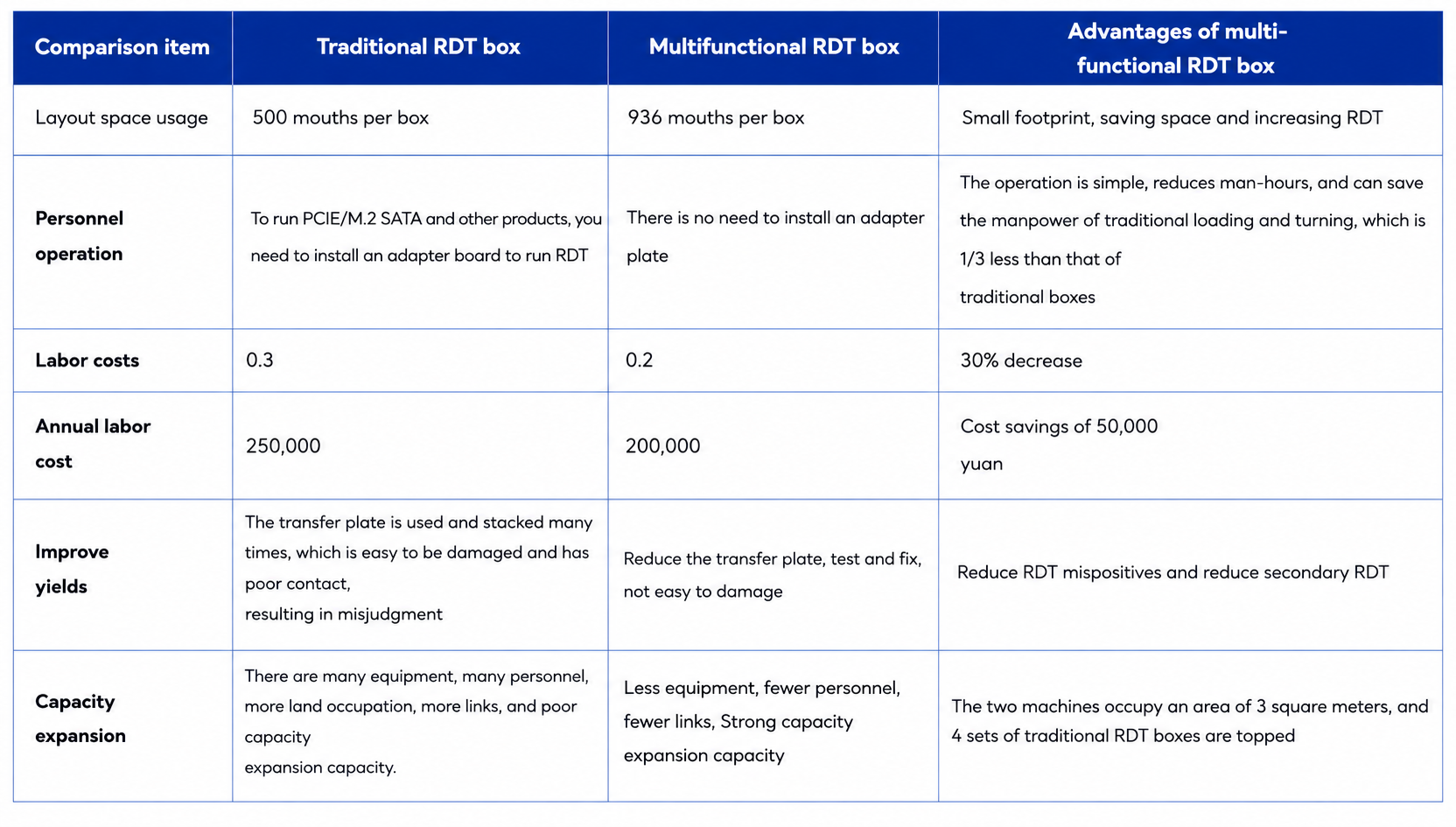
The integrated SSD RDT interface supports direct testing of M.2 SATA and M.2 PCIe SSDs without adapter boards.
This simplifies SSD installation and transfer procedures, improves production testing efficiency, and reduces manual handling and labor requirements.
4. Temperature control system
The temperature-control system can be switched on or off manually and features precision vertical air circulation for stable chamber temperature control. The over-temperature protection threshold can be configured according to test requirements.
When the RDT test begins, the heating system raises the chamber temperature from ambient temperature to 70°C in approximately 10 minutes and maintains it at the set temperature.
If the chamber temperature exceeds the preset limit during RDT testing, the exhaust system activates automatically to discharge hot air and return the chamber to the configured temperature.
5. Test process
1. Insert the SSD into the RDT test board. If the SSD is not recognized, the corresponding LED remains off.
2. Once the SSD is detected, the system automatically starts the RDT test. The LED flashes while testing is in progress.
3. After the RDT test is completed, the LED remains steadily lit or turns off according to the supported SSD controller solution. A flashing LED after test completion indicates a failed or abnormal SSD.
6. RDT test board
1. Each RDT test board provides 13 test ports supporting 2.5-inch SATA SSDs and M.2 M-Key SSDs. A complete cabinet supports up to 936 test ports.
2. Each test port is powered independently and uses high-current Schottky diode isolation to reduce electrical interference between ports.
-
3. Each port is equipped with three LED indicators:
∙ 5 V power indicator
∙ 3.3 V power indicator
∙ RDT operating-status indicator
For SSDs without onboard LEDs, test status can be identified through the RDT status indicator on the test board.
- 4. The RDT board is powered by a 12 V switching power supply. Each port uses a high-current DC-to-DC converter to provide a stable 5 V output.
5. Supported SSD capacity: Up to 4 TB.
- 4. The RDT board is powered by a 12 V switching power supply. Each port uses a high-current DC-to-DC converter to provide a stable 5 V output.
7. Comparison of the advantages of multi-functional RDT boxes
M.2 interface SSD test line comparison: estimated by 100K/month test capacity